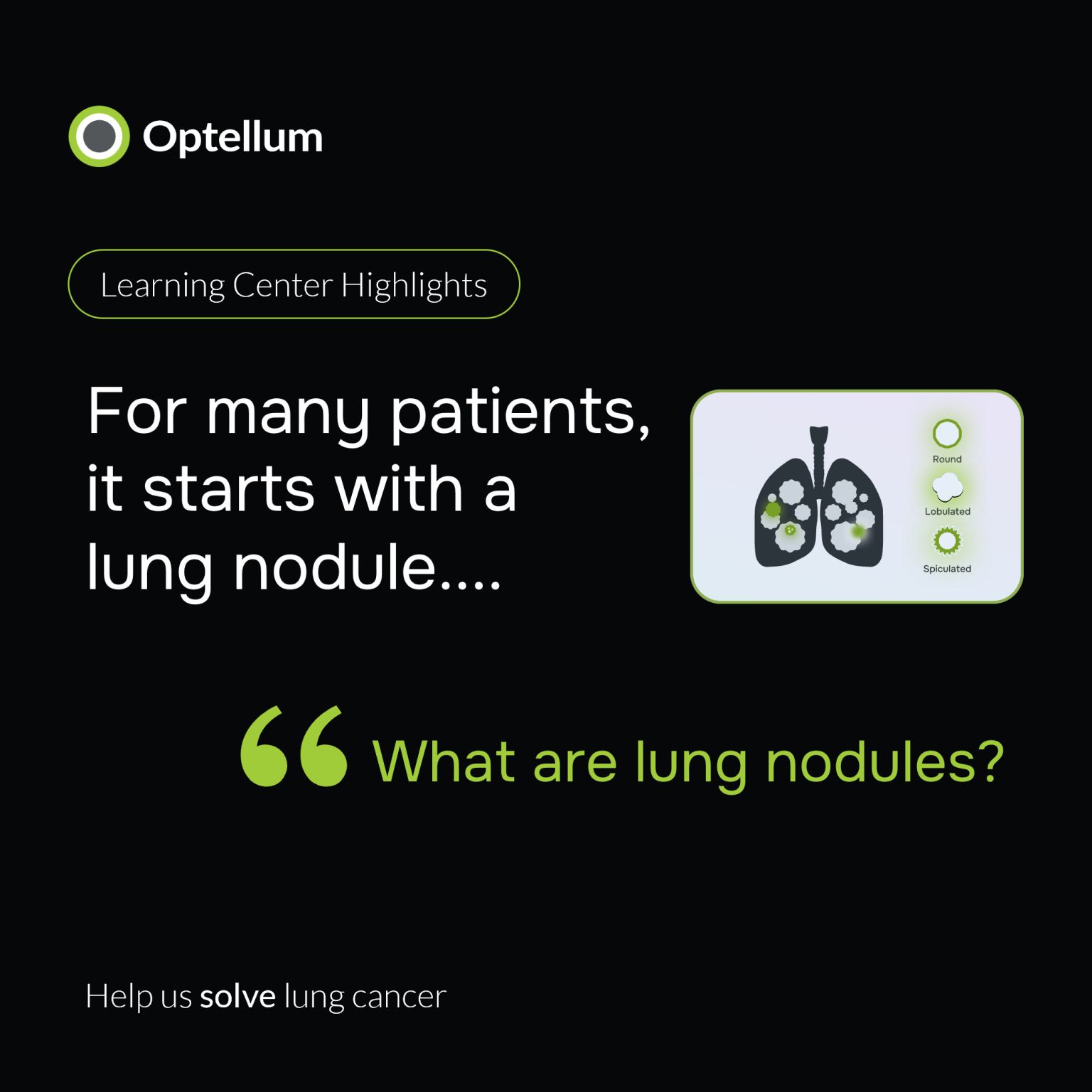
As we begin 2026, we're thinking about beginnings, and for many patients, the journey into lung cancer and lung disease care begins with a single finding on a scan - a small spot on the lung, called a lung nodule.
In this new series to start the year, "Learning Center Highlights", we delve a little deeper into lung nodules and what they mean for patients.
For many patients, hearing the words “lung nodule” can be unsettling. It raises immediate questions and understandable concern.
The reality is that lung nodules are common and often discovered incidentally during imaging for other reasons. Most nodules are benign, but some require follow-up based on size, growth, and individual risk factors.
What are pulmonary nodules and how are they found?
Pulmonary nodules are small, round, or oval spots in the lung. They are most often found incidentally during CT scans done for other medical reasons. Most nodules are less than 3 cm and cause no symptoms, which is why imaging plays a critical role in early detection.
Most pulmonary nodules are not cancer
95% of pulmonary nodules are benign.1 Common non-cancer causes include prior infections, inflammation, or scar tissue.
When is monitoring or further evaluation recommended?
Clinicians do not treat all nodules the same. Follow-up depends on factors such as nodule size and appearance; growth over time; and patient age and smoking history. Many nodules are safely monitored with scheduled imaging, while others may require additional evaluation to ensure timely care.
How do clinicians assess benign vs malignant nodules?
Clinicians combine imaging features, clinical data, and risk models to estimate the likelihood of cancer. Advanced tools like AI can support this process by helping prioritize nodules that may need closer attention, enabling more confident decisions and earlier intervention when necessary.
Source:
1. https://pubmed.ncbi.nlm.nih.gov/35040882/