In this post
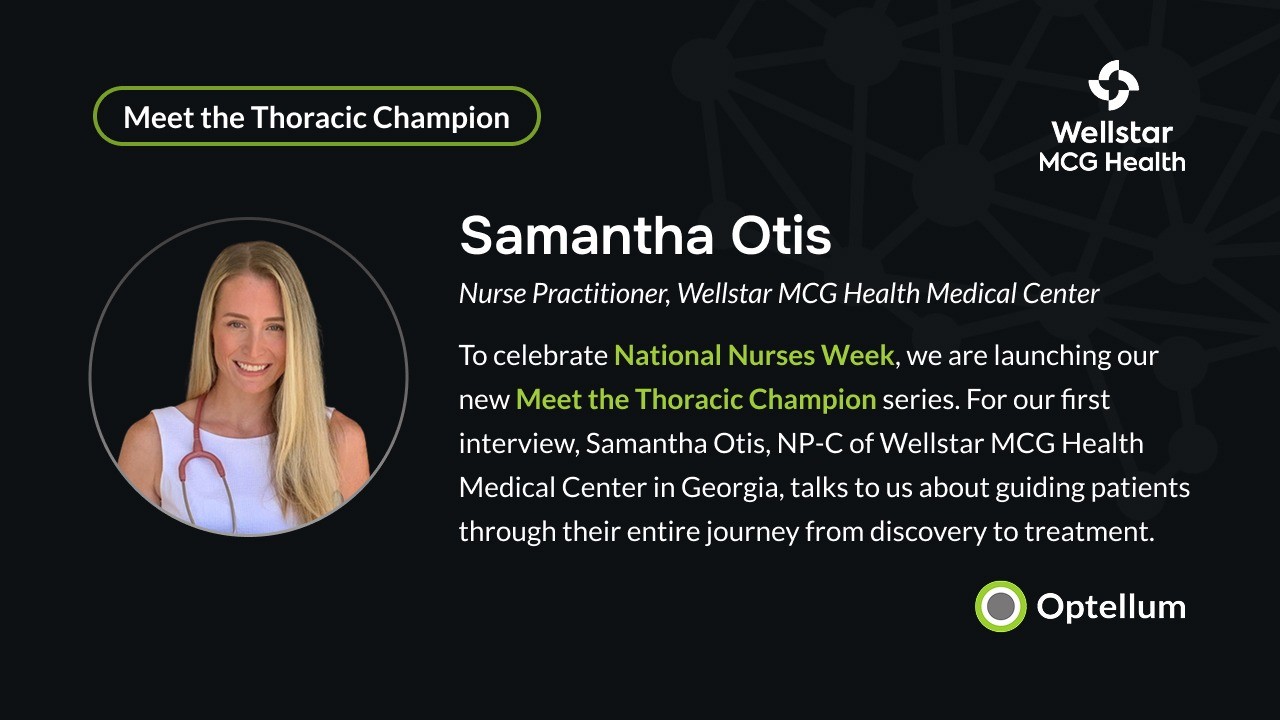
My name is Samantha Otis and I am a Nurse Practitioner working with MCG's Lung Cancer Screening Program. I get the opportunity to see patients in clinic through their journey, from discovery to treatment.
Q1: In your role as a nurse practitioner in Pulmonology, what are the biggest challenges you’ve encountered in managing incidental pulmonary nodules traditionally?
- Samantha: The biggest challenges are making sure that incidental nodules are not missed and that follow ups are done as needed.
Q2: Optellum’s VNC uses Patient Discovery AI to automatically flag nodules in radiology reports. How has this specific feature changed your daily clinical workflow?
- Samantha: This feature allows our team to catch more incidental nodules and ensure follow up is set up. Without the AI software, we would be relying on referrals from providers seeing incidental pulmonary nodules (IPNs) in scans. Sometimes referrals can get lost in the mix, particularly when the provider is focusing on an unrelated emergent health issue.
Q3: Clinicians often deal with the "follow-up gap," where over 60% of patients with indeterminate nodules may not receive the recommended workup. How does the VNC dashboard help your team close this gap?
- Samantha: The VNC dashboard alerts the assigned provider to any missed follow up. This allows our team to ensure the patient is contacted and rescheduled as soon as possible.
Q4: The Lung Cancer Prediction (LCP) AI provides a clinically validated malignancy risk score. How does this data-driven insight assist your team in triaging high-risk patients and making earlier clinical decisions?
- Samantha: Having a higher LCP score definitely pushes our team to be more aggressive. The score is also a tool that we are able to share with the patient and help come to the appropriate treatment decision together. The LCP score can help the patient to understand the urgency of the situation since they are able to see something on paper rather than just hearing words.
Q5: One of the ultimate goals in lung cancer care is achieving a "stage shift" toward earlier detection. In what ways has the partnership with Optellum helped your team expedite the time from discovery to definitive treatment?
- Samantha: Optellum has helped our team to reach patients immediately from the time of discovering an incidental pulmonary nodule. For example, if a patient is told about an IPN in the emergency department (ED) during an unrelated scan, they then must schedule an appointment with their primary care physician (PCP) to discuss. After seeing their PCP, they determine a follow up plan or get a referral. All of that adds on time. We now get the IPN finding directly and can contact the patient immediately for follow up.
Q6: What message would you give to other nurses about the role of AI technology in the future of patient-centered lung care?
- Samantha: AI has greatly helped medical advances and I think we should be welcoming to the changes; however, we should always check for errors and remember that no technology can replace the expertise and compassion demonstrated daily by actual human healthcare providers.
Q7: As we celebrate National Nurses Week, what’s one thing you love most about your role?
- Samantha: I love the diversity that I have in my role. With my full time job with MCG, I am able to see lung patients throughout the entire treatment process. I also work PRN in Urgent Care and get to treat more acute illnesses. Being able to see a multitude of patients rather than specializing in only one thing for my entire career is something that I really love.
Q8: And outside of work, how do you like to unwind or recharge after a busy week in the clinic?
- Samantha: I love spending time with my family (husband, two sons, and a puppy). I also play in a few tennis leagues to stay active and social!