

Learning Center See how Optellum helps
From diagnosis to care
Lung cancer
Welcome to our Learning Center on lung cancer care. Here you’ll find essential information about how lung cancer is detected, diagnosed & treated
 See how Optellum helps
Topics
Symptoms
Early diagnosis
Screening
Incidental nodules
Tests
Genetic testing
Treatment
Innovation
Access
Symptoms
What are the symptoms of lung cancer?
Lung cancer often doesn’t cause symptoms in its early stages, which is why many cases are diagnosed late. When symptoms do appear, they can vary depending on the location and spread of the tumor. Common symptoms include a persistent cough that doesn’t go away or worsens over time, coughing up blood, chest pain, and shortness of breath. Some people experience wheezing, hoarseness, or frequent lung infections like pneumonia. If lung cancer spreads beyond the lungs, it can cause bone pain, headaches, unexplained weight loss, and extreme fatigue. Because these symptoms can also be caused by other conditions, they are often overlooked, delaying diagnosis. This is why early detection of lung cancer through other means is so important.4
If you or anybody you know experiences any of these symptoms, it does not necessarily mean you have lung cancer, but it is important to speak with a doctor as soon as possible to determine the cause.
Early diagnosis
How can we diagnose lung cancer early?
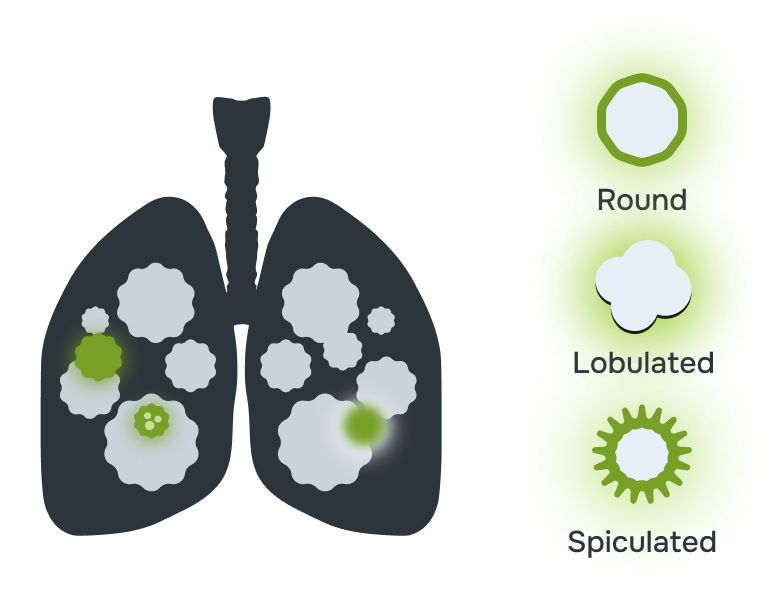
Detecting and risk stratifying lung nodules is the most reliable method for early diagnosis of lung cancer. Nodules are small growths or spots in the lungs (<3 cm in diameter) that can be benign or malignant. If they are malignant, they can grow larger than 3 cm, at which point they are classified as lung masses or tumors. Imaging like CT scans can detect these nodules early, allowing doctors to monitor their growth and determine if they are cancerous. This early detection provides a critical window for starting treatment before the disease progresses. A key enabler of detecting these nodules, however, is the presence of CT scanners and a nodule program that actively flags and follows nodules up for further investigation. CT scanners are crucial because X-rays have inadequate resolution to allow most nodules to be detected.2,5
Similarly, without the structured follow-up of a nodule or screening program, nodules found on scans may go untracked, delaying diagnosis until symptoms appear. Emerging technologies are also improving early detection. AI-assisted analyses are helping radiologists and specialist lung doctors identify and assess the risk of nodules with greater accuracy. And blood-based tests, such as liquid biopsies, are being studied for their potential to detect cancer signals before tumors grow large enough to be seen on a scan. Researchers are also exploring biomarkers in breath and sputum as potential ways of detecting lung cancer early.6
Similarly, without the structured follow-up of a nodule or screening program, nodules found on scans may go untracked, delaying diagnosis until symptoms appear. Emerging technologies are also improving early detection. AI-assisted analyses are helping radiologists and specialist lung doctors identify and assess the risk of nodules with greater accuracy. And blood-based tests, such as liquid biopsies, are being studied for their potential to detect cancer signals before tumors grow large enough to be seen on a scan. Researchers are also exploring biomarkers in breath and sputum as potential ways of detecting lung cancer early.6
Screening
What about lung cancer screening?
Lung cancer screening is an essential tool for detecting lung nodules and finding lung cancer early in people who don’t have symptoms. This is especially the case among high-risk populations like long-term smokers. Screening with low-dose CT (LDCT) has been shown to reduce lung cancer deaths. In the US, the US Preventive Services Task Force (USPSTF) recommends annual LDCT scans for adults aged 50 to 80 years’ old, who have a 20 pack-year smoking history and currently smoke or have quit within the past 15 years. The American College of Radiology (ACR) have developed a standardized reporting system called Lung-RADS for use in LDCT lung cancer screening programs to classify nodules and guide follow-up recommendations.4,7 Meanwhile in the UK, the NHS is implementing the Targeted Lung Health Check (TLHC) program. This initiative invites individuals aged 55 to 74 who are current or former smokers for a lung health check, which may include a CT scan if deemed appropriate.
However, it’s important to distinguish between incidental detection (nodules found during scans for other reasons) and systematic screening detection (nodules found during these dedicated screening programs). The vast majority – around 85% – of lung nodules are detected incidentally, rather than through systematic lung cancer screening programs.2 Systematic screening programs almost all target smokers in their criteria. But ‘lung cancer in never-smokers’ (LCINS) alone is the sixth deadliest cancer worldwide.8 Therefore, this reliance on rigid screening criteria for lung cancer screening means many of these nodules in never-smokers that could be cancerous are either missed or not followed up properly.9 Therefore, both incidental and systematic screening have their part to play in enabling early lung cancer diagnosis.
However, it’s important to distinguish between incidental detection (nodules found during scans for other reasons) and systematic screening detection (nodules found during these dedicated screening programs). The vast majority – around 85% – of lung nodules are detected incidentally, rather than through systematic lung cancer screening programs.2 Systematic screening programs almost all target smokers in their criteria. But ‘lung cancer in never-smokers’ (LCINS) alone is the sixth deadliest cancer worldwide.8 Therefore, this reliance on rigid screening criteria for lung cancer screening means many of these nodules in never-smokers that could be cancerous are either missed or not followed up properly.9 Therefore, both incidental and systematic screening have their part to play in enabling early lung cancer diagnosis.
Figure 1. Lung cancer in never-smokers alone is one of the deadliest cancers worldwide (2022)9

Incidental nodules
What are incidental lung nodule programs?
Incidental nodule programs, also known as opportunistic screening in some countries, are designed to track and manage lung nodules that are unexpectedly detected during imaging for unrelated medical reasons, such as chest X-rays or CT scans performed because of a chronic lung condition or after chest trauma. Without structured follow-up, many of these nodules go unmonitored, delaying potential lung cancer diagnoses.2 In the US, these programs often operate within hospital systems and radiology networks, using standardized protocols and AI-assisted software to track patients and prompt further evaluation when necessary. The ACR and the Fleischner Society provide guidelines on managing incidentally detected nodules, recommending risk-based follow-up imaging or specialist referral depending on nodule size, growth, and patient risk factors.7,10 In the UK, the British Thoracic Society (BTS) has established guidelines for the investigation and management of lung nodules, including incidentally detected ones, to ensure they are properly evaluated and followed up.5
Outside the US and UK, opportunistic screening programs exist in countries like Canada and Australia, where efforts are being made to integrate incidental findings into structured lung health pathways. Some healthcare systems are developing centralized registries to systematically track nodules and reduce missed diagnoses, ensuring that patients receive appropriate follow-up rather than being lost in the system. Since most lung nodules – around 85% – are detected incidentally rather than through dedicated screening programs, these initiatives play a critical role in early lung cancer detection. By ensuring proper follow-up, incidental nodule programs help identify cancer earlier, when treatment is most effective.11
Outside the US and UK, opportunistic screening programs exist in countries like Canada and Australia, where efforts are being made to integrate incidental findings into structured lung health pathways. Some healthcare systems are developing centralized registries to systematically track nodules and reduce missed diagnoses, ensuring that patients receive appropriate follow-up rather than being lost in the system. Since most lung nodules – around 85% – are detected incidentally rather than through dedicated screening programs, these initiatives play a critical role in early lung cancer detection. By ensuring proper follow-up, incidental nodule programs help identify cancer earlier, when treatment is most effective.11
Tests
What tests are used to confirm lung cancer diagnosis?
Once a lung nodule or suspicious mass is detected, several tests are used to confirm whether it is cancerous and classify it so that the best treatment option may be selected. A tissue biopsy is the most definitive test, where a sample of lung tissue is taken and examined under a microscope. This can be done through a bronchoscopy, where a thin tube is inserted into the airways to collect a sample, or a CT-guided needle biopsy, which involves extracting cells from the lung through the chest wall. In some cases, a surgical biopsy, such as video-assisted thoracoscopic surgery (VATS) or open thoracotomy, may be needed if other methods do not provide a conclusive diagnosis.5,10
PET-CT scans are routinely conducted to assess metabolic activity and determine if the lung cancer has spread to lymph nodes or other organs. MRI scans are used less frequently, but may be performed if there is suspicion of brain metastases or certain soft-tissue involvement. Molecular testing is increasingly used to classify the specific type of lung cancer and guide treatment decisions. This involves analyzing tumor samples (from a tissue biopsy or liquid biopsy) for genetic mutations, which helps determine eligibility for targeted therapies or immunotherapy.5,10 Early and accurate diagnosis of lung cancer is crucial for determining the most effective treatment approach.
PET-CT scans are routinely conducted to assess metabolic activity and determine if the lung cancer has spread to lymph nodes or other organs. MRI scans are used less frequently, but may be performed if there is suspicion of brain metastases or certain soft-tissue involvement. Molecular testing is increasingly used to classify the specific type of lung cancer and guide treatment decisions. This involves analyzing tumor samples (from a tissue biopsy or liquid biopsy) for genetic mutations, which helps determine eligibility for targeted therapies or immunotherapy.5,10 Early and accurate diagnosis of lung cancer is crucial for determining the most effective treatment approach.
Genetic testing
What is genetic testing, and how does it guide treatment?
Genetic testing, also called molecular testing, helps doctors find specific changes (mutations) in lung cancer cells. These changes can make the cancer grow, and knowing which ones are present helps doctors choose the best treatment. Some lung cancers have mutations like EGFR, ALK, KRAS, or ROS1, which can be treated with targeted therapies – special drugs designed to block the cancer’s growth.6 For example, if a tumor has an EGFR mutation, a patient may receive a drug like osimertinib (Tagrisso) to slow or stop the cancer.12 If it has an ALK mutation, drugs like alectinib (Alecensa) or lorlatinib (Lorbrena) might be used instead.13,14
Another important type of treatment is immunotherapy, which helps the body’s immune system fight cancer. Drugs like Keytruda (pembrolizumab) block PD-1, a protein that cancer cells use to hide from the immune system. By blocking PD-1, Keytruda helps immune cells recognize and attack cancer. A newer drug, Ivonescimab, works similarly but is different because it is a bispecific antibody. This means it blocks both PD-1 and VEGF, another protein that helps tumors grow by creating new blood vessels. By blocking both of these at the same time, Ivonescimab may work better in some patients than drugs that only target PD-1. Genetic testing is now a routine part of lung cancer care because it helps doctors choose the most effective treatment. By matching the right therapy to the right cancer, patients have a better chance of responding to treatment and avoiding unnecessary side effects.6
Another important type of treatment is immunotherapy, which helps the body’s immune system fight cancer. Drugs like Keytruda (pembrolizumab) block PD-1, a protein that cancer cells use to hide from the immune system. By blocking PD-1, Keytruda helps immune cells recognize and attack cancer. A newer drug, Ivonescimab, works similarly but is different because it is a bispecific antibody. This means it blocks both PD-1 and VEGF, another protein that helps tumors grow by creating new blood vessels. By blocking both of these at the same time, Ivonescimab may work better in some patients than drugs that only target PD-1. Genetic testing is now a routine part of lung cancer care because it helps doctors choose the most effective treatment. By matching the right therapy to the right cancer, patients have a better chance of responding to treatment and avoiding unnecessary side effects.6
Treatment
What are the main treatment options for lung cancer?
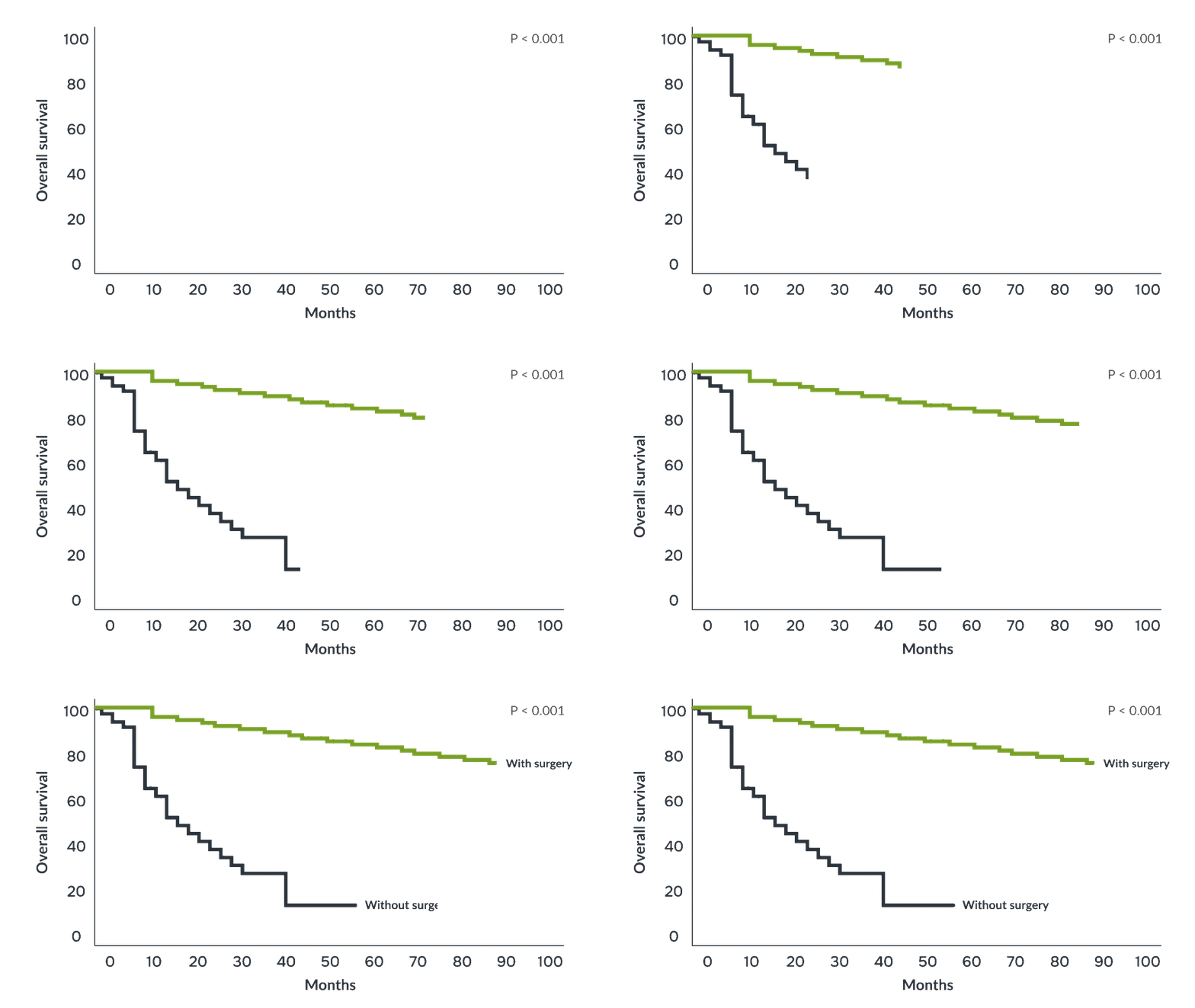
Treatment depends on the stage of the lung cancer. For early-stage lung cancer (stage 1 or 2), the main treatment is surgery to remove the tumor. In the US alone, almost 60 thousand lung cancer surgeries are performed each year.3 Extrapolating this worldwide, we can assume there are around 500 thousand lung cancer surgeries performed each year. The majority of these are lobectomies, which involve the removal of an entire lobe of the lung.15 These surgeries are often followed by adjuvant therapy, such as chemotherapy, immunotherapy, or targeted therapy, to lower the risk of the cancer recurring. In some cases, neoadjuvant therapy (treatment before surgery) is used to shrink the tumor and improve outcomes.13-14
For advanced-stage lung cancer, treatment focuses on controlling the disease. If genetic testing finds mutations like EGFR, ALK, or ROS1, patients may receive targeted therapies that block these cancer-driving signals.6 If no targetable mutation is found, immunotherapy (such as Keytruda) or chemotherapy is often used.14 Radiation therapy may also help shrink tumors and relieve symptoms. Treatment is increasingly personalized based on the cancer type and how far it has spread. Early-stage lung cancer patients generally experience better outcomes with fewer side effects, as the disease is more manageable and can be surgically removed before it spreads to other parts of the body.15 This underscores the critical importance of early diagnosis of lung cancer, since it significantly increases the chances of successful treatment and long-term survival.
For advanced-stage lung cancer, treatment focuses on controlling the disease. If genetic testing finds mutations like EGFR, ALK, or ROS1, patients may receive targeted therapies that block these cancer-driving signals.6 If no targetable mutation is found, immunotherapy (such as Keytruda) or chemotherapy is often used.14 Radiation therapy may also help shrink tumors and relieve symptoms. Treatment is increasingly personalized based on the cancer type and how far it has spread. Early-stage lung cancer patients generally experience better outcomes with fewer side effects, as the disease is more manageable and can be surgically removed before it spreads to other parts of the body.15 This underscores the critical importance of early diagnosis of lung cancer, since it significantly increases the chances of successful treatment and long-term survival.
Figure 2. Early diagnosis enables lung cancer surgery with better overall survival15
Innovation
What advances are improving lung cancer care?
While incidence rates for lung cancer have fallen in many higher income countries, due to better diagnosis and treatment, the absolute number of cases continues to rise. Worldwide, the number of lung cancer cases is set to grow to an estimated 4.3 million cases by 2045.16 To combat this, the future of lung cancer care is moving toward more precise and less invasive methods for diagnosis, aiming to reduce unnecessary procedures while ensuring timely treatment. Advanced AI and radiomics are playing a key role in analyzing imaging data to assess the risk of malignancy. These technologies help identify high-risk nodules quickly, allowing clinicians to prioritize cases that require immediate attention, while avoiding unnecessary biopsies for benign ones.17
Additionally, image-based AI and radiomics are showing promise in helping guide procedures, with advanced visualization, quantification, and characterization of lung nodules and masses to aid decision-making.18 These new AI-based techniques complement other more established advanced technology like liquid biopsies. By integrating these innovations into care pathways, the goal is to improve patient outcomes through faster, more accurate, and minimally invasive diagnosis and guide more precise, more effective treatment for lung cancer.19
Additionally, image-based AI and radiomics are showing promise in helping guide procedures, with advanced visualization, quantification, and characterization of lung nodules and masses to aid decision-making.18 These new AI-based techniques complement other more established advanced technology like liquid biopsies. By integrating these innovations into care pathways, the goal is to improve patient outcomes through faster, more accurate, and minimally invasive diagnosis and guide more precise, more effective treatment for lung cancer.19
Figure 3. Projected increase in lung cancer cases worldwide (2020-2045)

Access
How do i know if my lung cancer test or treatment will be covered?
Coverage for lung cancer tests and treatment depends on a variety of factors, including insurance type, national healthcare policies, and clinical practice guidelines. In the US, private insurance plans, Medicare, and Medicaid typically cover lung cancer screening for eligible individuals only – those aged between 50 and 80 with a 20 pack-year smoking history who currently smoke or quit within the past 15 years. Standard diagnostic tests and approved treatments, such as tissue biopsies, imaging, standard genetic tests, chemotherapy, and radiation, are generally covered. Moreover, Medicare has reimbursed next-generation sequencing (NGS; advanced genetic profiling) for advanced or metastatic cancers since 2018. But newer technologies like liquid biopsies may require additional approval or out-of-pocket costs, depending on reimbursement status.20,21 Many pharmaceutical companies and nonprofit organizations offer financial assistance programs for expensive treatments, such as targeted therapies and immunotherapies.
Outside the US, coverage varies widely depending on the country’s healthcare system. In countries with strong universal healthcare systems like the UK, essential procedures and treatments are covered by the NHS. However, access to new technologies, procedures, and therapies is often restricted, inconsistently applied, or delayed by comprehensive cost-effectiveness & cost-utility assessments and lengthy approval processes.22 For example, NGS testing for lung cancer is limited in Germany and France, with significant regional variation in Spain and Italy, with “lack of published evidence” showing “local impact” being a prime factor.19 Patients facing coverage challenges may explore clinical trials, patient assistance programs, or appeals processes to gain access to more advanced care. Checking with insurance providers, hospital financial counselors, or advocacy organizations can help clarify coverage options and potential alternatives.
Outside the US, coverage varies widely depending on the country’s healthcare system. In countries with strong universal healthcare systems like the UK, essential procedures and treatments are covered by the NHS. However, access to new technologies, procedures, and therapies is often restricted, inconsistently applied, or delayed by comprehensive cost-effectiveness & cost-utility assessments and lengthy approval processes.22 For example, NGS testing for lung cancer is limited in Germany and France, with significant regional variation in Spain and Italy, with “lack of published evidence” showing “local impact” being a prime factor.19 Patients facing coverage challenges may explore clinical trials, patient assistance programs, or appeals processes to gain access to more advanced care. Checking with insurance providers, hospital financial counselors, or advocacy organizations can help clarify coverage options and potential alternatives.
Sources and further reading
1. SEER, National Cancer Institute 2025. Cancer Stat Facts: Lung and Bronchus Cancer.2. Gould et al 2015. Recent Trends in the Identification of Incidental Pulmonary Nodules.3. Potter et al 2023. Assessing the number of annual lung cancer resections performed in the United States.4. American Cancer Society 2023. Screening for lung cancer.5. Callister et al 2015. British Thoracic Society guidelines for the investigation and management of pulmonary nodules: accredited by NICE.6. Fois et al 2021. Molecular Epidemiology of the Main Druggable Genetic Alterations in Non-Small Cell Lung Cancer.7. Christensen et al 2024. ACR Lung-RADS v2022: Assessment Categories and Management Recommendations.8. Dubin and Griffin 2020. Lung cancer in non-smokers.9. LoPiccolo et al 2024. Lung cancer in patients who have never smoked — an emerging disease.10. MacMahon et al 2017. Guidelines for Management of Incidental Pulmonary Nodules Detected on CT Images: From the Fleischner Society 2017.11. Pyenson et al 2019. No Apparent Workup for most new Indeterminate Pulmonary Nodules in US Commercially-Insured Patients.12. AstraZeneca 2024. Tagrisso approved in the EU for patients with unresectable EGFR-mutated lung cancer.13. Bristol Myers Squibb 2024. U.S. Food and Drug Administration Approves Perioperative Treatment of Neoadjuvant Opdivo® (nivolumab) and Chemotherapy Followed by Surgery and Adjuvant Single-Agent Opdivo for Resectable Non-Small Cell Lung Cancer (NSCLC).14. Merck (MSD) 2023. FDA Approves KEYTRUDA® (pembrolizumab) for Treatment of Patients With Resectable (T≥4 cm or N+) NSCLC in Combination With Chemotherapy as Neoadjuvant Treatment, Then Continued as a Single Agent as Adjuvant Treatment After Surgery.15. Chen et al 2022. The surgical resection of the primary tumor increases survival in patients with EGFR-mutant advanced non-small cell lung cancer: a tertiary center cohort study.16. International Agency for Research on Cancer, WHO 2025. Estimated number of new cases from 2022 to 2040, Both sexes, age [0-85+], Trachea, bronchus and lung.17. Kim et al 2024. Clinical utility of an artificial intelligence radiomics-based tool for risk stratification of pulmonary nodules.18. Valter et al 2024. Pre- and post-operative lung cancer recurrence prediction following curative surgery: A retrospective study using European radiomics and clinical data.19. Hedblom et al 2023. Cancer patient management: Current use of next-generation sequencing in the EU TOP4.20. American Lung Association. USPSTF Lung Cancer Screening Recommendation Toolkit.21. American Cancer Society Cancer Action Network 2023. Payer Coverage Policies of Tumor Biomarker and Pharmacogenomic Testing.22. OECD Health Working Paper No. 146 2024. Access to oncology medicines in EU and OECD countries.
Contact your doctor to see if they use Optellum to help detect lung cancer early
You might also be interested in
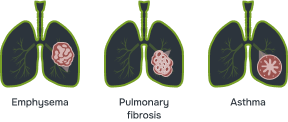
Lung disease: Beyond infections & cancer
Welcome to our Learning Center on chronic lung disease. Here you’ll find essential information about what it is, and how we diagnose and treat...
Read more
Lung nodules
Welcome to our Learning Center page on lung nodules. Here you’ll find essential information about what they are and how they relate to lung cancer.
Read more
Lung cancer: Types, causes & burden
Welcome to one of our Learning Center pages on lung cancer. Here you’ll find essential information about what it is and why early diagnosis matters.
Read more
Certification