

Learning Center See how Optellum helps
Types, causes & burden
Lung cancer
Welcome to our Learning Center on lung cancer. Here you’ll find essential information about what it is and why early diagnosis matters
 See how Optellum helps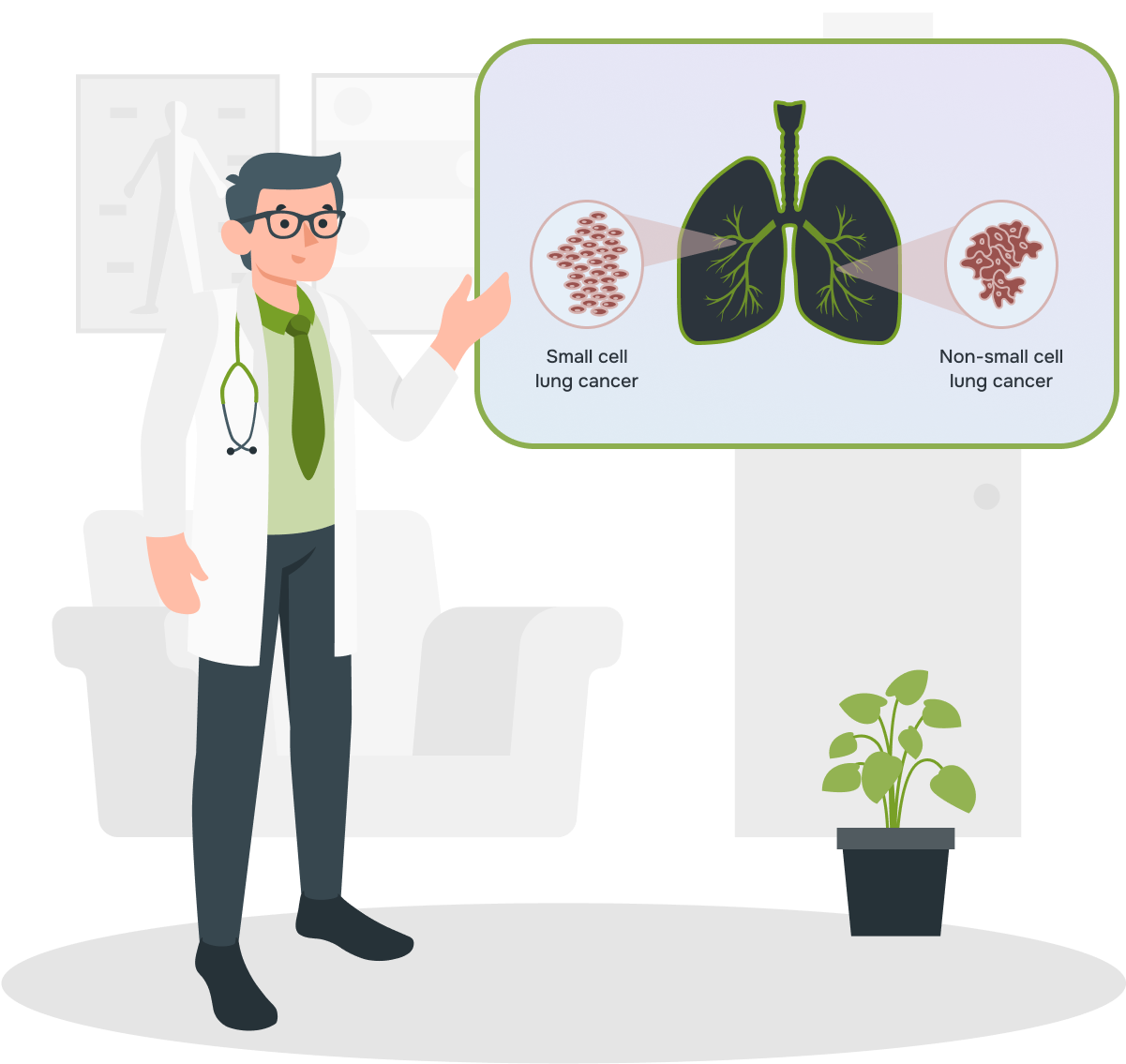
Topics
Lung cancer
Types
Prevalence
Risk factors
Non-smokers
Survival rates
Lung cancer
What is lung cancer?
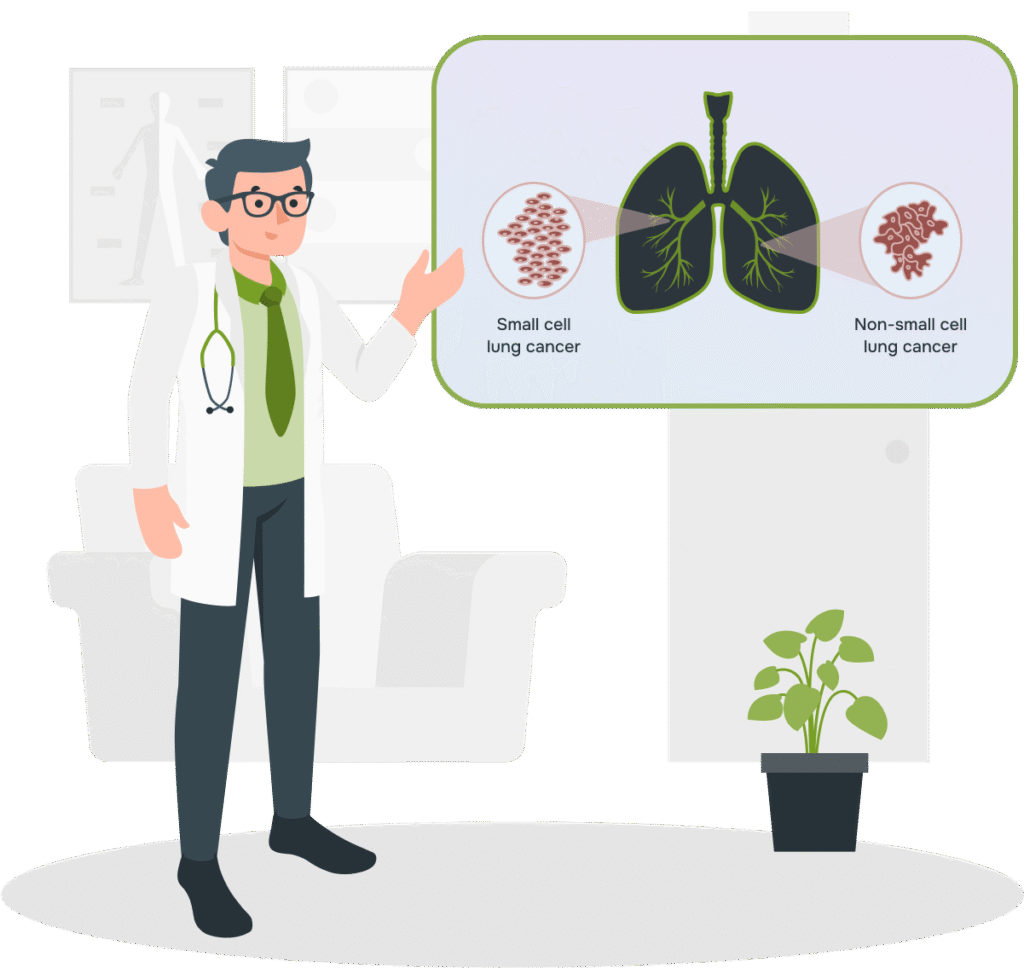
Our lungs enable us to breathe and form part of our respiratory system, along with our mouths and windpipes (trachea). When cells in the lungs grow uncontrollably, forming tumors, they can interfere with our breathing and spread to other parts of the body. This is lung cancer. The two main types of lung cancer are non-small cell lung cancer (NSCLC), which makes up about 85% of cases, and small cell lung cancer (SCLC), which is more aggressive but less common.3
Lung cancer can develop in different parts of the lungs and may affect their ability to exchange oxygen efficiently. Some tumors grow slowly, while others spread rapidly to lymph nodes or distant organs. Because the lungs do not have many pain receptors, lung cancer may not cause noticeable symptoms in its early stages, which is why it can sometimes progress without being detected right away.4
Lung cancer can develop in different parts of the lungs and may affect their ability to exchange oxygen efficiently. Some tumors grow slowly, while others spread rapidly to lymph nodes or distant organs. Because the lungs do not have many pain receptors, lung cancer may not cause noticeable symptoms in its early stages, which is why it can sometimes progress without being detected right away.4
Types
What are the different types of lung cancer?
Non-small cell lung cancer (NSCLC) includes three main subtypes. Adenocarcinoma is the most common, especially in non-smokers, and usually develops in the outer lungs. It is also the most likely to have genetic mutations, which can influence how the cancer grows. Squamous cell carcinoma, which is strongly linked to smoking, typically tends to grow in the central airways, where it blocks airflow. Large cell carcinoma is less common but tends to grow and spread quickly.3
Small cell lung cancer (SCLC), while less common than NSCLC, is more aggressive. It often starts in the central airways and spreads rapidly. It is almost always associated with smoking and is usually diagnosed at an advanced stage. Unlike NSCLC, SCLC is less likely to have targetable genetic mutations, but it may have other molecular changes that affect treatment.3
Small cell lung cancer (SCLC), while less common than NSCLC, is more aggressive. It often starts in the central airways and spreads rapidly. It is almost always associated with smoking and is usually diagnosed at an advanced stage. Unlike NSCLC, SCLC is less likely to have targetable genetic mutations, but it may have other molecular changes that affect treatment.3
Prevalence
How common is it?
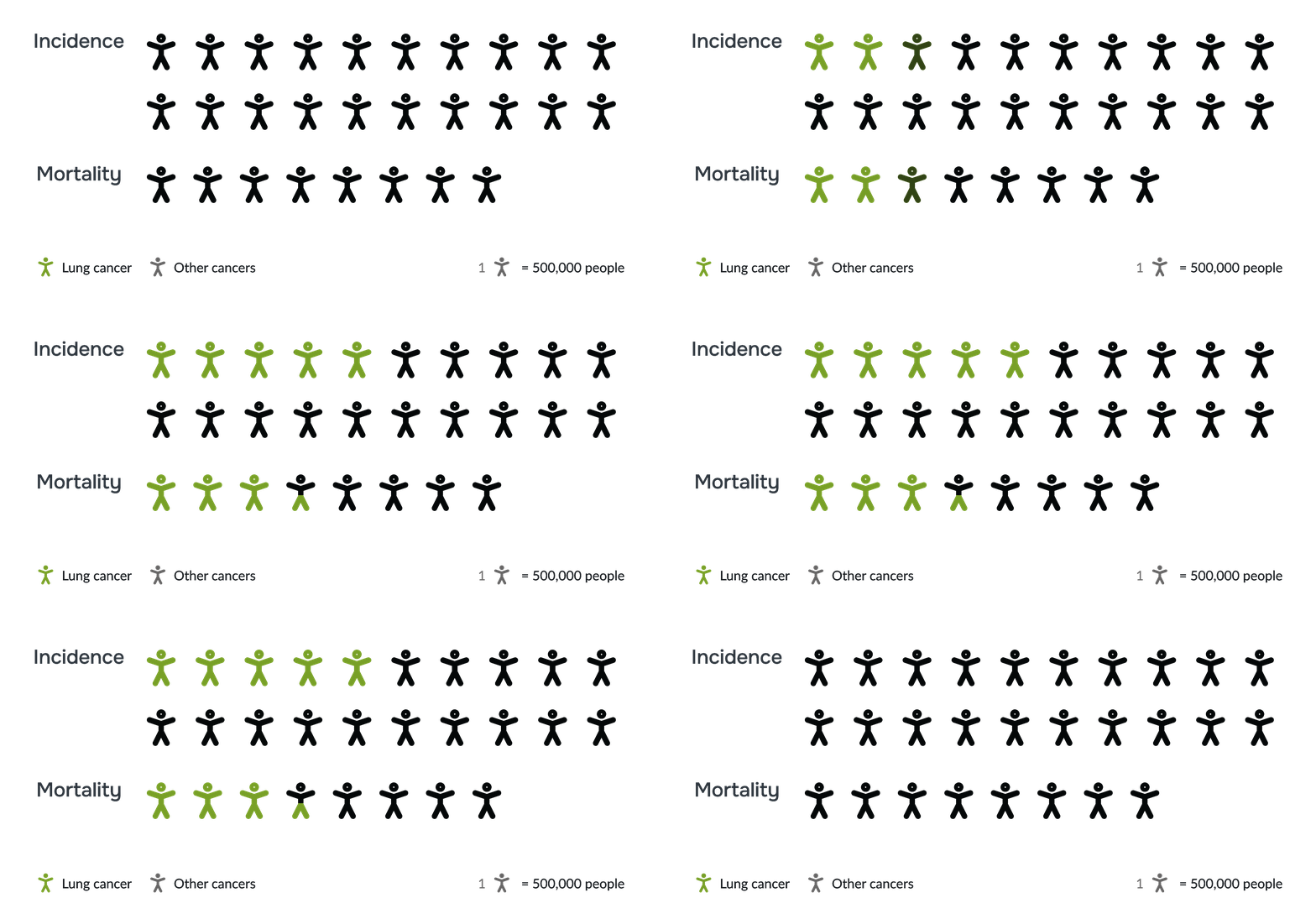
Lung cancer is newly diagnosed in almost 2.5 million people around the world each year, making it vie with breast cancer for the commonest cancer. However, it is, by a long way, the deadliest cancer, responsible for more than 1.8 million deaths annually, more than the second and third deadliest cancers combined.1 In the US, lung cancer is the deadliest cancer and the third commonest cancer, with around 125,000 deaths and more than 230,000 new cases each year. While overall incidence has declined since the 1990s, lung cancer is rising among younger adults and women, with incidence in women surpassing that in men among under-65s in 2021.5-8
In the UK, lung cancer is also the third commonest cancer, after breast and prostate cancer, with just under 50,000 new cases each year. While overall incidence rates in the UK have decreased, similar to the US, this trend differs between sexes, with incidence rates in women increasing by 32% since the early 1990s, while rates in men have decreased by 35%.9 Globally, certain regions are experiencing rising lung cancer rates, especially among non-smokers. Factors such as air pollution have been implicated in this increase. For instance, in East Asia, a significant number of lung cancer cases have been linked to air pollution.
In the UK, lung cancer is also the third commonest cancer, after breast and prostate cancer, with just under 50,000 new cases each year. While overall incidence rates in the UK have decreased, similar to the US, this trend differs between sexes, with incidence rates in women increasing by 32% since the early 1990s, while rates in men have decreased by 35%.9 Globally, certain regions are experiencing rising lung cancer rates, especially among non-smokers. Factors such as air pollution have been implicated in this increase. For instance, in East Asia, a significant number of lung cancer cases have been linked to air pollution.
Figure 1. Global lung cancer incidence and mortality compared to other cancers (2022)1
Risk factors
What are the risk factors for lung cancer?
Smoking is the leading risk factor for lung cancer, and has long been responsible for the majority of cases. Exposure to secondhand smoke also increases risk, even in non-smokers. Other environmental factors include long-term exposure to radon gas, air pollution, and hazardous substances such as asbestos and diesel exhaust. Genetics can also play a role, with some individuals inheriting a higher susceptibility to lung cancer. Additionally, lung diseases like chronic obstructive pulmonary disease (COPD) and pulmonary fibrosis may increase risk due to long-term lung damage.3,4
Non-smokers
What about non-smokers?
If you split lung cancer into lung cancer in smokers versus lung cancer in never-smokers (LCINS), LCINS comes out as the fifth or sixth deadliest cancer worldwide (depending on year and classification). While smoking is the biggest risk factor, around 20% of lung cancers occur in people who have never smoked, and more than 30% of lung cancer deaths are not attributable to tobacco usage. In fact, LCINS is rising, particularly among women and younger adults. Non-smokers can develop lung cancer due to other risk factors, such as radon gas, air pollution, or workplace carcinogens like asbestos and diesel fumes. Genetic mutations also play a role, with some non-smokers more likely to develop lung cancer due to inherited or spontaneous DNA changes.2,7
One of the most well-known mutations is in the epidermal growth factor receptor (EGFR) gene, which is found in a high percentage of lung cancers in non-smoking Southeast and East Asian women. EGFR mutations drive tumor growth and are more commonly seen in adenocarcinomas, the most common type of lung cancer in non-smokers. These cancers often appear as ground-glass opacities (GGOs) on CT scans – hazy areas in the lungs that may progress over time but can initially be slow-growing.7
Beyond EGFR, other genetic mutations such as ALK and ROS1 rearrangements are also more prevalent in lung cancer cases among non-smokers. These findings highlight the importance of genetic testing in lung cancer patients, particularly in non-smokers, as their cancers often respond better to targeted therapies designed for these mutations.
One of the most well-known mutations is in the epidermal growth factor receptor (EGFR) gene, which is found in a high percentage of lung cancers in non-smoking Southeast and East Asian women. EGFR mutations drive tumor growth and are more commonly seen in adenocarcinomas, the most common type of lung cancer in non-smokers. These cancers often appear as ground-glass opacities (GGOs) on CT scans – hazy areas in the lungs that may progress over time but can initially be slow-growing.7
Beyond EGFR, other genetic mutations such as ALK and ROS1 rearrangements are also more prevalent in lung cancer cases among non-smokers. These findings highlight the importance of genetic testing in lung cancer patients, particularly in non-smokers, as their cancers often respond better to targeted therapies designed for these mutations.
Survival rates
Why is it so deadly?
Lung cancer is often classified into four high-level stages based on how far it has spread. In stage 1, the cancer is still small and confined to the lung. Stage 1 may be further divided into 1A where the tumor is very small (≤3 cm) and has not spread, and stage 1B where the tumor is slightly larger (3-4 cm) or has started affecting nearby lung structures. Stage 2 means the tumor is larger or has spread to nearby lymph nodes. Stage 3 indicates further spread within the chest, often to more lymph nodes or nearby structures. Stage 4 is the most advanced, meaning the cancer has spread to distant parts of the body.8,9
Lung cancer is particularly deadly because it often goes undetected until it has reached stages 3 or 4. By then, it is more likely to have spread to other organs, making treatment more challenging and reducing survival rates. The great majority of cases, around 1.6 million each year, are caught late at these stages 3 & 4. A patient diagnosed with stage 1A lung cancer is six times more likely to survive than someone diagnosed with stage 3C (5-year survival rates: 90% versus 12% on average). Therefore, late diagnosis is the primary driver behind lung cancer’s high number of deaths.8,9
Lung cancer is particularly deadly because it often goes undetected until it has reached stages 3 or 4. By then, it is more likely to have spread to other organs, making treatment more challenging and reducing survival rates. The great majority of cases, around 1.6 million each year, are caught late at these stages 3 & 4. A patient diagnosed with stage 1A lung cancer is six times more likely to survive than someone diagnosed with stage 3C (5-year survival rates: 90% versus 12% on average). Therefore, late diagnosis is the primary driver behind lung cancer’s high number of deaths.8,9
Figure 2. Five-year lung cancer survival rates at each TNM stage8,9

Sources and further reading
1. Bray et al 2024. Global cancer statistics 2022: GLOBOCAN estimates of incidence and mortality worldwide for 36 cancers in 185 countries.2. Dubin and Griffin 2020. Lung cancer in non-smokers.3. Cancer Research UK 2025. Types of lung cancer.4. Gould et al 2015. Recent Trends in the Identification of Incidental Pulmonary Nodules.5. American Cancer Society 2024. Lung Cancer Kills More People Worldwide Than Other Cancer Types.6. Siegel et al 2025. Cancer statistics, 2025.7. LoPiccolo et al 2024. Lung cancer in patients who have never smoked — an emerging disease.8. SEER, National Cancer Institute 2025. Cancer Stat Facts: Lung and Bronchus Cancer.9. Cancer Research UK 2025. Lung cancer statistics.
Contact your doctor to see if they use Optellum to help detect lung cancer early
You might also be interested in
Lung cancer: From diagnosis to care
Welcome to our Learning Center on lung cancer care. Here you’ll find essential information about how lung cancer is detected, diagnosed & treated
Read more
Lung disease: Beyond infections & cancer
Welcome to our Learning Center on chronic lung disease. Here you’ll find essential information about what it is, and how we diagnose and treat...
Read more
Lung nodules
Welcome to our Learning Center page on lung nodules. Here you’ll find essential information about what they are and how they relate to lung cancer.
Read more
Certification