

UConn Health’s AI-Powered Approach for Early Detection and Treatment of Lung Cancer
UConn Health has integrated Optellum’s Virtual Nodule Clinic (VNC) in their workflow to aid in the detection and management of lung cancer. Lung cancer is a prevalent and deadly disease, with 1.8 million annual deaths globally and 134,000 in the US alone. Early identification significantly improves survival rates, but late diagnoses are common due to symptom absence in early stages and low screening participation. VNC offers a streamlined process for identifying potential malignancies, ensuring proper follow-up, and enhancing diagnostic accuracy and ensuring consistent, more efficient decision making through AI-assisted analysis.
The implementation of VNC at UConn Health includes a Patient Discovery AI module that automatically identifies patients with reported lung nodules, facilitating prompt review by the clinical team.
Additionally, the software features an FDA-cleared AI powered Lung Cancer Prediction tool, which assigns a risk score to nodules, aiding in diagnostic and treatment decisions.
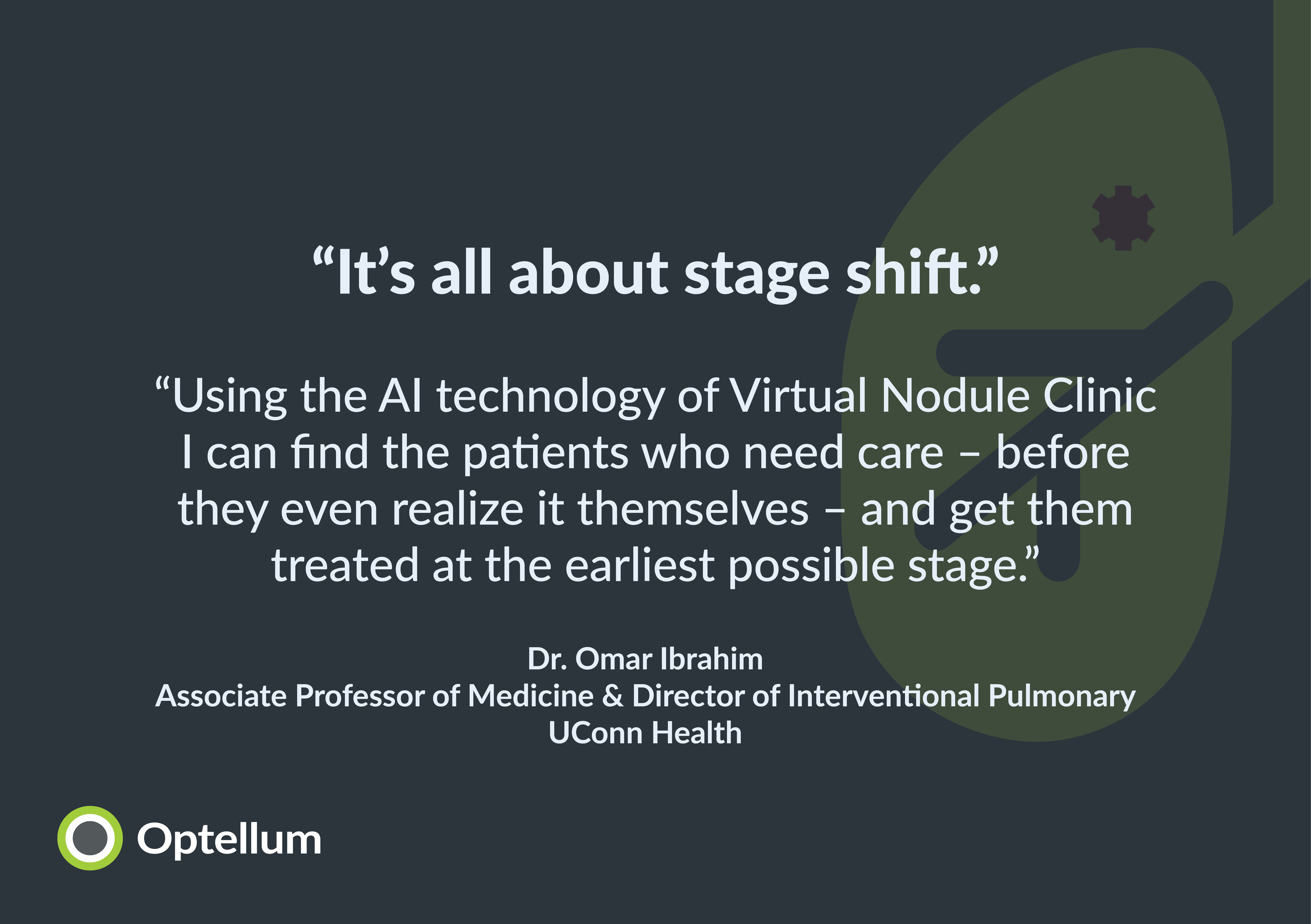
Despite Connecticut’s impressive lung cancer survival rate, disparities exist in early diagnosis, particularly among minority groups. Led by Dr. Omar Ibrahim, Associate Professor of Medicine and Director of Interventional Pulmonary at UConn Health, and the Carole and Ray Neag Comprehensive Cancer Center, the clinical team at UConn Health aims to leverage AI technology to improve early diagnosis rates and expedite treatment, ultimately enhancing patient outcomes.
Read the full story here.
Recent posts