In this post
Dr. K. Adam Lee is on the frontlines of helping patients fight the deadliest form of cancer: lung cancer. The board-certified thoracic surgeon has treated lung cancer patients for more than 30 years. With over 238,000 patients diagnosed with lung cancer worldwide last year, and a five-year survival rate of just 23% for the disease, physicians like Dr. Lee are waging a war against a formidable opponent.
A new AI technology, however, is now giving oncologists a powerful tool to diagnose lung cancer at much earlier stages – often before a patient shows any symptoms – and allows treatment before it progresses to a life-threatening stage.
“More people die of lung cancer than any other cancer in the nation,” says Lee, who refers to the new technology as “a paradigm shift” in lung cancer diagnosis. “The only way to deal with this is early detection,”
Lee directs the Thoracic Surgery and Lung Center of Excellence at Jupiter Medical Center, the first hospital in Florida to implement this technology. Known as Virtual Nodule Clinic, the AI technology was launched at Jupiter Medical Center in March.
The technology has two components. The first employs natural language processing to identify and report suspicious lung nodules on patients’ CT scans. The reason for these scans initially often has nothing to do with a cancer concern.
Lee explains that a patient may be complaining of abdominal pain or chest pain and receive a CT scan at Jupiter Medical Center’s emergency room or an urgent care location. Often lung nodules are found unintentionally on these scans, nodules that otherwise might not have been detected. “There are over 90 million CT scans done nationally every year,” Lee says. “Of those 90 million, there are some cancers that are there that we just don’t see.”
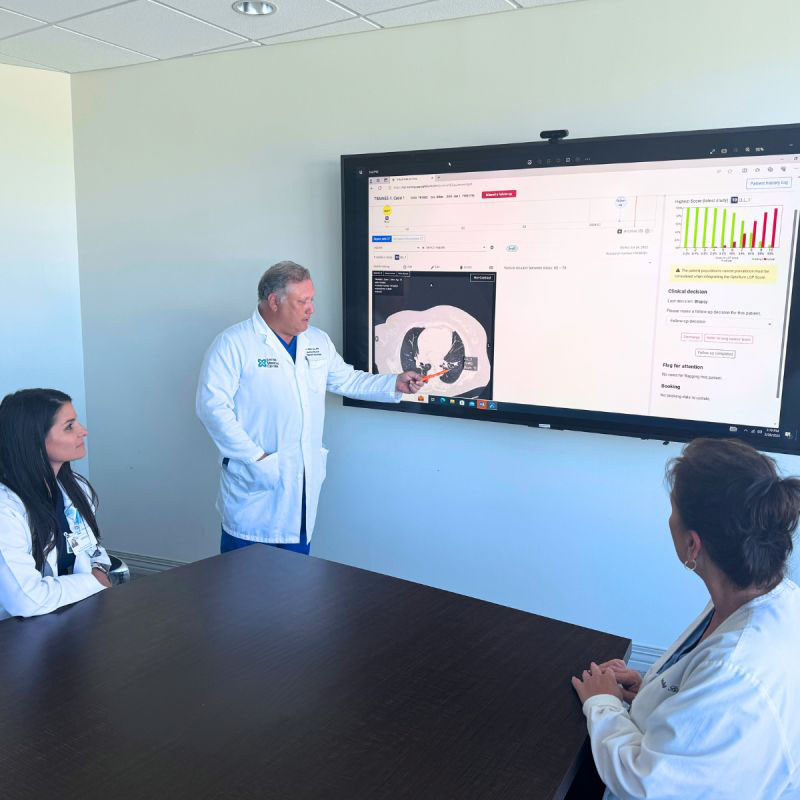
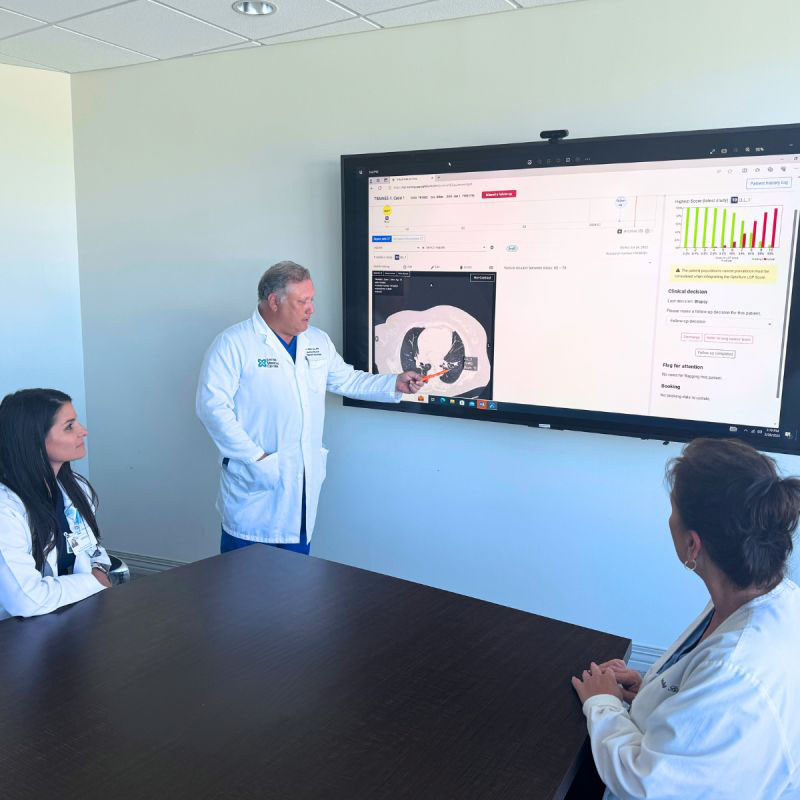
With the new AI technology now in place at Jupiter Medical Center, scans that show lung nodules will be flagged. The AI technology reads each radiologist report and automatically looks for lung nodule references. If a reference to a lung nodule is found, Dr. Lee and his team are automatically alerted. “If the nodule is between 5mm and 30mm, we will call the patient and let them know about it,” he says.
Once a nodule is identified, lung cancer predictor AI technology is used to pinpoint the probability of the nodule being cancerous. Lee stresses that not every lung nodule is cancer. “The technology breaks down the pixelation in the scan and compares it to over 100,000 positive nodules to see where it conforms within the shape, size and pixelation. Then it gives us a score of zero to 10.” A higher score means a higher probability of cancer.”
Lee says the technology is a game-changer for oncologists and will save countless lives by identifying lung cancers much earlier. “Currently only 6% of patients are screened for lung cancer. If we can kick that number up to 25 or 30% you can just imagine what that will mean for the reduction in deaths.”
The American Lung Association recommends that anyone 50 to 80 years old who is a smoker or has a history of smoking (one pack a day for 20 years) should get a lung screening. Lung screenings are typically covered by insurance. Lee says screenings should be more widespread. “We’re seeing women who don’t smoke have a higher presence of lung cancers. Environmental factors like radon in the home, exposure to chemicals in hair salons, hormonal changes, all may be factors,” Lee says.
Jupiter Medical Center has been recognized as a Screening Center of Excellence by the Lung Cancer Alliance, offering patients concerned about, or at risk for lung cancer swift and painless screenings that facilitate early detection. For additional details on lung screenings visit www.jupitermed.com/lung.