In this post
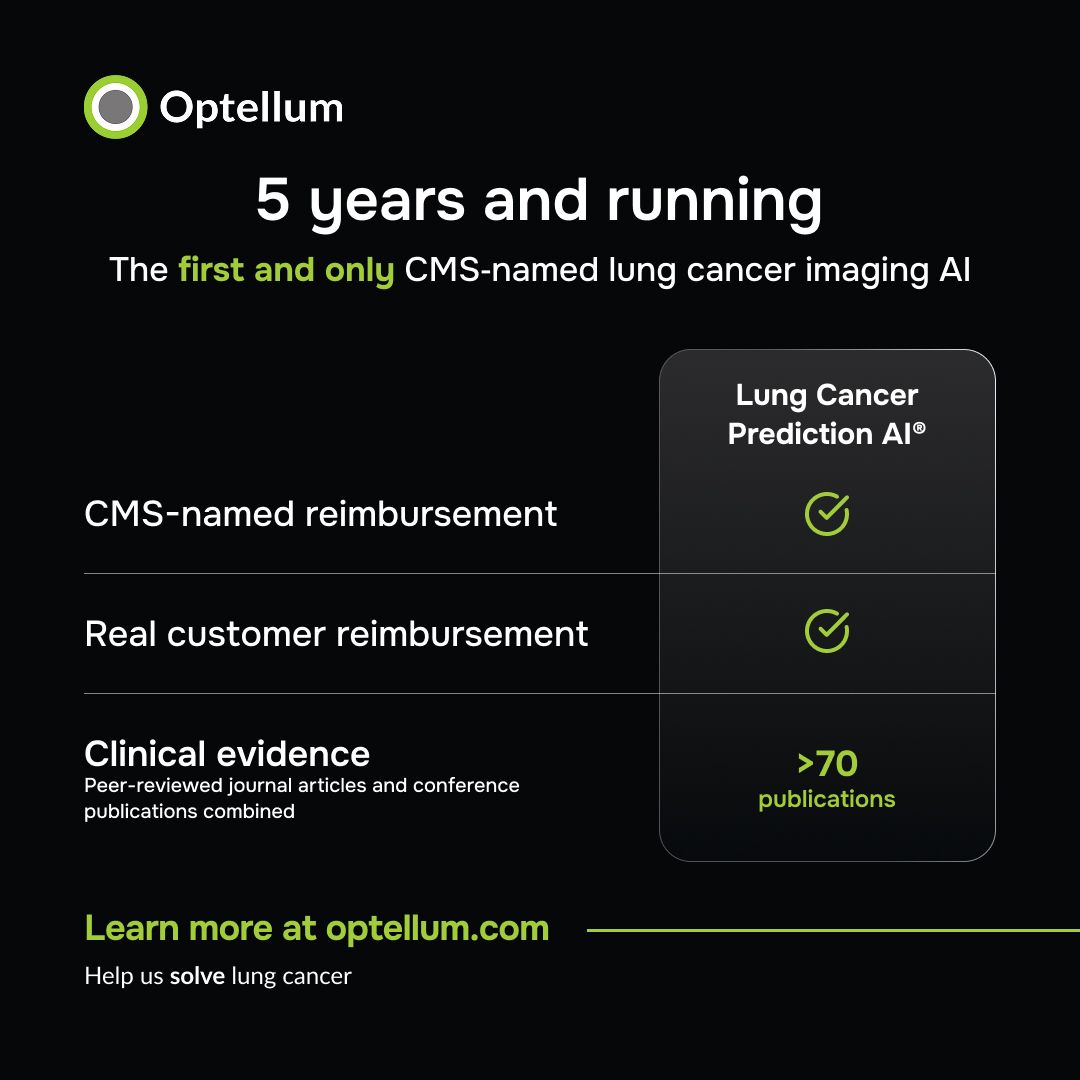
Optellum is the only Lung Nodule AI with named reimbursement by CMS 5 years and running. 1, 2, 3, 4, 5
In this next topic of our Learning Center Highlight series, we’ll explore why the time between detecting a lung nodule and taking action matters more than ever in lung cancer survival. 1 In lung cancer care, finding a lung nodule is only the beginning of the story. What happens next can significantly shape a patient’s outcomes. Time to surgery (TTS) is not just an operational issue. It is strongly associated with survival, recurrence risk, and whether patients remain eligible for curative treatment when intervention occurs. 1, 2
Timing matters after a lung nodule is found
Lung nodules are common, with incidental lung nodules identified in up to 31% of chest CT scans performed for unrelated reasons. 3
While most nodules are benign, some may represent early-stage lung cancer that can often be treated more successfully when caught and acted on early. The opportunity with early detection is clear: lung cancer identified at an earlier stage is more likely to be treated with curative intent, including surgery. 4
But detection alone is not enough.
Increasing evidence shows that the amount of time between identifying a suspicious lung nodule and surgical treatment can directly affect patient outcomes. This interval, commonly referred to as Time to Surgery (TTS), generally describes how long a patient waits between being diagnosed through CT-based imaging and receiving lung cancer surgery. 1, 2
8 weeks is the critical window between detection and surgery
Research highlighted in the American College of Surgeons Bulletin found that patients with Stage I and II NSCLC who underwent surgery within approximately 8 weeks (56 days) of CT-based diagnosis experienced improved 5-year survival and lower recurrence rates compared with patients whose surgeries occurred after longer delays. 1
Additional thoracic oncology studies have associated surgical delays beyond 12 weeks with: 1, 2, 5
-
Greater chance that the cancer becomes more advanced before surgery
-
Fewer opportunities for treatment while cancer is still treatable
-
Poorer long-term survival outcomes for some patients
For many health systems, these delays are not caused by a single issue. They often reflect fragmented follow-up processes, inconsistent tracking systems, and growing imaging volumes across incidental lung nodule (ILN) and lung cancer screening (LCS) programs. Likewise, race, patients living in underserved communities, and longer distance from the treatment facilities may also be associated with longer TTS. 1
Better risk stratification is becoming a bigger priority in closing the gap in lung cancer care
Not every lung nodule requires the same level of urgency. One of the biggest challenges in lung nodule management is identifying which patients may be at higher risk for lung cancer and need faster follow-up, additional testing, or earlier intervention.
To help support this process, AI-enabled clinical diagnostic support tools are increasingly being added into clinical workflows to assist with more consistent risk assessment and patient prioritization. These technologies are not designed to autonomously diagnose and thus replace physician decision-making. Instead they help physicians and care teams quickly and seamlessly identify high-risk nodules earlier so patients who need urgent attention can be evaluated and treated sooner. 6, 7
Earlier detection means little without timely action
As more health systems expand LCS and ILN programs, the focus is shifting beyond detection alone. The bigger challenge now is making sure patients move through follow-up, evaluation, and treatment quickly and consistently once a suspicious nodule is found.
For patients with potentially cancerous nodules, delays of several weeks or months can significantly affect outcomes, including whether the disease is still caught at a stage where curative treatment remains possible.
Finding a lung nodule earlier creates a critical opportunity.
But what happens next, how fast high-risk patients are identified, prioritized, referred, and treated, may ultimately shape the difference between early intervention and missed treatment windows.
Explore our Learning Center to learn more about:
-
Lung nodules: how they are assessed and followed over time.
-
Lung cancer: key risk factors, the role of early diagnosis, and what NSCLC and SCLC mean in practice.
-
Lung cancer care: how structured pathways and advanced tools can support earlier, more consistent decisions
Patients may also find support through organizations such as the American Cancer Society, American Lung Association, GO2 for Lung Cancer, and Cancer Research UK.
Sources:
[1] 2026 HOPPS
[2] 2025 HOPPS
[3] 2024 HOPPS
[4] 2023 HOPPS
[5] 2022
[6] Optellum publications page